
Capacitive Touchscreen Monitors
Projected capacitive (PCAP) monitors with smartphone-smooth 10-point multi touch — in rubber frame, aluminum frame, and open frame builds from 7″ to 55″. Plug and play over HDMI and USB with your existing PC.

Rubber Frame Capacitive Monitors
13 models 7’’ Capacitive Touchscreen MonitorFT07TMCAPOB$298.86View Product →
 8″ Capacitive Touchscreen MonitorFT08TMCAPOB$308.58View Product →
 10″ Capacitive Touchscreen MonitorFT10TMCAPOB$387.83View Product →
 10.1″ Capacitive Touchscreen MonitorFT101TMCAPOB$396.33View Product →
 12.1″ Capacitive Touch Screen MonitorFT121TMCAPOB$534.92View Product →
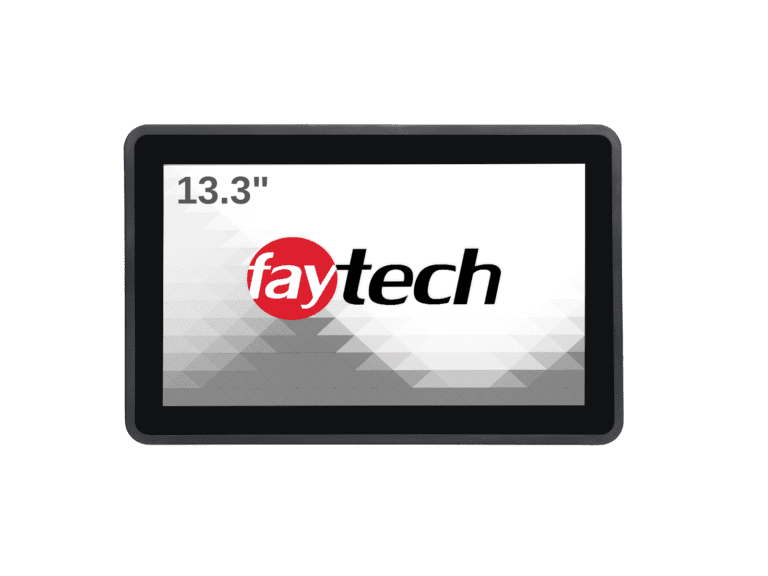 13.3’’ Capacitive Touchscreen MonitorFT133TMCAPOB$575.93View Product →
 15″ Capacitive Touchscreen MonitorFT15TMCAPOB$578.31View Product →
 15.6″ Capacitive Touchscreen MonitorFT156TMCAPOB$597.53View Product →
 17″ Capacitive Touchscreen MonitorFT17TMCAPOB$600.54View Product →
 19″ Capacitive Touchscreen MonitorFT19TMCAPOB$629.53View Product →
 21.5″ Capacitive Touchscreen MonitorFT215TMCAPOB$695.00View Product →
 24″ Capacitive Touchscreen MonitorFT24TMCAPOB$824.89View Product →
 27″ Capacitive Touchscreen MonitorFT27TMCAPOB$1,175.55View Product →
Aluminum Frame Capacitive Monitors
13 models 7″ Aluminum Frame Capacitive Touchscreen MonitorFT07TMACAPOBGet a Quote →
 8″ Aluminum Frame Capacitive Touchscreen MonitorFT08TMACAPOBGet a Quote →
 10″ Aluminum Frame Capacitive Touchscreen MonitorFT10TMACAPOBGet a Quote →
 10.1″ Aluminum Frame Capacitive Touchscreen MonitorFT101TMACAPOBGet a Quote →
 12.1″ Aluminum Frame Capacitive Touchscreen MonitorFT121TMACAPOBGet a Quote →
 15″ Aluminum Frame Capacitive Touchscreen MonitorFT15TMACAPOBGet a Quote →
 15.6″ Aluminum Frame Capacitive Touchscreen MonitorFT156TMACAPOBGet a Quote →
 21.5″ Aluminum Frame Capacitive Touchscreen MonitorFT215TMACAPOBGet a Quote →
 24″ Aluminum Frame Capacitive Touchscreen MonitorFT24TMACAPOBGet a Quote →
 27″ Aluminum Frame Capacitive Touchscreen MonitorFT27TMACAPOBGet a Quote →
 32″ Capacitive Touchscreen MonitorFT32TMBCAPOB$2,305.76View Product →
 43″ Capacitive Touchscreen Monitor (as Project)FT43TMBCAPOB$4,383.92View Product →
 55″ Capacitive Touchscreen Monitor (as Project)FT55TMBCAPOB$4,995.96View Product →
Open Frame Capacitive Monitors
8 models 7” Open Frame Capacitive Touch MonitorFT07TMCAPOFHBOB/3030510467$369.00View Product →
 11.6″ Open Frame Capacitive Touch MonitorFT116TMCAPOFHBOB$628.20View Product →
 15″ Open Frame Capacitive Touch MonitorFT15TMCAPOFHBOB$736.27View Product →
 15.6″ Open Frame Capacitive Touch MonitorFT156TMCAPOFHBOB$861.41View Product →
 21.5″ Open Frame Capacitive Touch MonitorFT215TMCAPOFHBOB$932.20View Product →
 32″ Open Frame Capacitive Touch MonitorFT32TMCAPOFHBOB$1,898.87View Product →
 43″ Open Frame Capacitive Touch Screen MonitorFT43HDKTMCAPHBOB$3,231.30View Product →
 55″ Open Frame Capacitive Touch Monitor (4K)FT55HDKTMCAPHBOB4K$5,528.00View Product →
Why faytech capacitive monitors
Real PCAP glass
Projected capacitive touch sensors behind thermally strengthened glass — fast, accurate, and immune to surface wear.
10-point multi touch
Pinch, zoom, rotate, and two-person use — the same gestures your users know from their phones.
Optically bonded
The touch glass is bonded to the panel: better picture quality, no internal condensation, stronger screen.
Three frame systems
Rubber frame for impact protection, aluminum frame for clean integration, open frame for building in.
Capacitive Monitor FAQs
How does capacitive touch screen technology work?
A projected capacitive (PCAP) screen projects a fine electrostatic field through the glass. When your fingertip — conductive, like the human body — approaches, touch sensors measure the change in the field and resolve it to precise coordinates. Because the sensing happens through solid glass, nothing flexes or wears out, and the surface stays accurate through millions of touches.
What is the difference between rubber frame and aluminum frame monitors?
The touch technology is identical — the difference is the housing. Rubber frame monitors wrap the display in an impact-absorbing bezel, ideal where the monitor may be knocked or transported. Aluminum frame models use a slim metal chassis for clean, professional integration into counters, walls, and machines. Open frame versions strip the housing entirely for mounting inside your own enclosure.
Do capacitive monitors work with gloves?
Thin latex, nitrile, and touchscreen-rated gloves work on faytech PCAP glass, and sensitivity can be tuned for glove use at the controller level. Thick leather or insulated work gloves block the capacitive field — for those environments a resistive touchscreen monitor, which responds to pressure from any object, or a purpose-built industrial touch screen monitor, is the better fit.
Are these monitors plug and play?
Yes. Connect the HDMI cable for video and the USB cable for touch, and Windows, Linux, or Android recognizes the monitor as a native touch input — no driver installation. All models also include VGA or DisplayPort options and standard VESA mounting, so retrofitting an existing PC into a touch workstation takes minutes.
Can I get a capacitive monitor readable in direct sunlight?
Yes — several capacitive models are available in high brightness, sunlight readable versions, and open frame high-brightness units are built specifically for storefront and semi-outdoor installations. If your deployment faces a window or the outdoors, tell us — brightness is a configuration choice, not a different product line.
Which screen sizes are available?
The capacitive line runs from 7″ to 55″. Rubber frame models cover 7″ to 27″, aluminum frame extends to 32″–55″ large formats, and open frame covers the most-requested integration sizes. All sizes support portrait or landscape orientation, and smaller sizes are also available as all-in-one capacitive touch PCs with the computer built in.
Capacitive vs resistive: which touch screen monitor should I choose?
The two technologies solve different problems. Capacitive touch screens sense the electrical field of a bare fingertip through glass, giving fast, precise, multi touch response — the same feel as a smartphone. Resistive touch panels register physical pressure instead, so they respond to a gloved hand, a stylus, or any hard object, which is why resistive touch screen monitors stay common on factory floors and in cold-storage environments. Choose capacitive for public-facing kiosks, POS, and any bare-hand or thin-glove use where speed and clarity matter. Choose resistive where heavy gloves, styluses, or contaminants rule out exposed capacitive glass.
What is the difference between projected capacitive (PCAP) and surface capacitive touch screens?
Both are capacitive touch screens, but they sense differently. Projected capacitive (PCAP) technology — what faytech uses across this line — etches a grid of sensors beneath the glass, so the system reads exact coordinates and supports true 10-point multi touch and gestures, with sensitivity tuned at the controller. Surface capacitive panels measure a field only at the four corners, giving single touch input and no gesture support, which is why they have largely disappeared from commercial installations. For the full mechanics, see what is a capacitive touch screen. Across faytech’s monitor line, projected capacitive is the only touch panel technology offered.
What resolution and screen size options do capacitive touch screen monitors offer?
Resolution scales with screen size across the line: smaller capacitive touch screen monitors are built around resolutions suited to control panels and point-of-sale interfaces, while mid-size and large-format models step up to higher resolutions for signage, dashboards, and detailed graphics. Every panel outputs native resolution over HDMI, DisplayPort, or VGA, so image sharpness also depends on the video source driving it. Because exact resolution varies by frame type and size, tell us your target display area and any pixel-density requirement, and we will match the closest model — or discuss a custom panel if your project needs something outside the standard range.
What comes with an open frame capacitive monitor, and how does it connect?
Open frame capacitive monitors ship as the bare panel and touch sensor on a mounting frame — no bezel, no stand, no port cluster. Video and touch reach the panel through a rear connector board, so the build routes the connectivity options (HDMI or VGA, plus USB touch) inside the enclosure rather than through a faceplate. Because there is no housing to absorb shock or seal an edge, weatherproofing and impact protection become the enclosure builder’s job, not the panel’s. This construction targets integrators building kiosks, gaming cabinets, and point-of-sale terminals around the glass. Share your target cutout and depth, and we will confirm fit.
What brightness level does a capacitive monitor need for different lighting environments?
Brightness needs scale with how much ambient light competes with the screen. A shaded indoor lobby or office needs no upgrade over a standard commercial panel. A storefront window or a covered, open-air walkway calls for genuine sunlight readable capacitive monitors, since daylight through glass washes out a standard panel within a few feet of the window. For placements facing direct sun and weather, brightness alone is not the fix — pair the high-brightness panel with an IP-rated sealed enclosure, since glare readability and moisture protection are separate problems. Tell us the lighting and the exposure, and we will match brightness and sealing together.
Can I use a stylus or pen on a capacitive monitor?
Capacitive glass senses conductivity, the same principle a smartphone screen uses, so a passive plastic stylus that works on a resistive panel will not reliably register here. A capacitive-tip stylus — the kind sold for phones and tablets — does work, since the tip conducts the same way a finger does, and this makes fine input possible for signature capture or detailed forms as a secondary feature alongside normal finger touch. If your application depends on pressure-sensitive pen input, stylus wear from constant use, or operation with heavy gloves, a resistive touch screen monitor is the better technology match.
How do I buy a capacitive touch screen monitor, and what are typical lead times?
Start with a quote request for the capacitive touchscreen monitors you need: tell us the frame type, screen size, and any features your installation requires, such as high brightness or a specific mounting pattern, and faytech will confirm the closest match or a custom configuration. Standard rubber and aluminum frame models in common sizes are the fastest purchase path, since they draw from established production runs; open frame and less common sizes generally take longer to schedule. Lead times vary with current order volume and customization, so customers with a hard install date should share it upfront.
How durable is capacitive glass in high-traffic public installations?
The touch panels on faytech capacitive monitors are thermally strengthened and optically bonded to the display, a construction feature that resists impact, scratching from everyday cleaning, and the internal condensation that weakens bonded glass over time. Because the sensing electronics sit behind solid glass rather than a flexible membrane, there is no surface to wear out from repeated presses, which is why these panels hold their touch accuracy through years of public-facing use in kiosks, POS counters, and self-service control stations. Rubber frame housings add impact protection at the edges for the highest-traffic, most exposed installations.
Need help picking a frame or size?
Tell us where the monitor lives and what touches it — we’ll spec the right build.